
Words by Denva Beaubrun
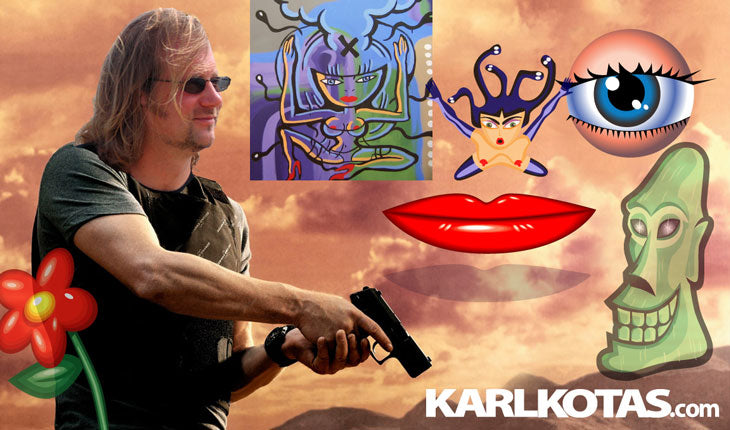
Karl Kotas's art tells a story of resilience and never giving up. This is a scrapbook-memoir hybrid, combining Kotas's own art with the art of artists he encountered along the way. It traces a journey from barely making it to making it: a hard and long road, but ultimately a paying one.
It serves as a chronological gallery through the scenes he passed through. He gives a story behind each place he visits and the story behind his art. Each one gets its own chapter, with first-person prose and lots of art. From the first page, he makes clear that punk is the deep appreciation guiding everything in the book.
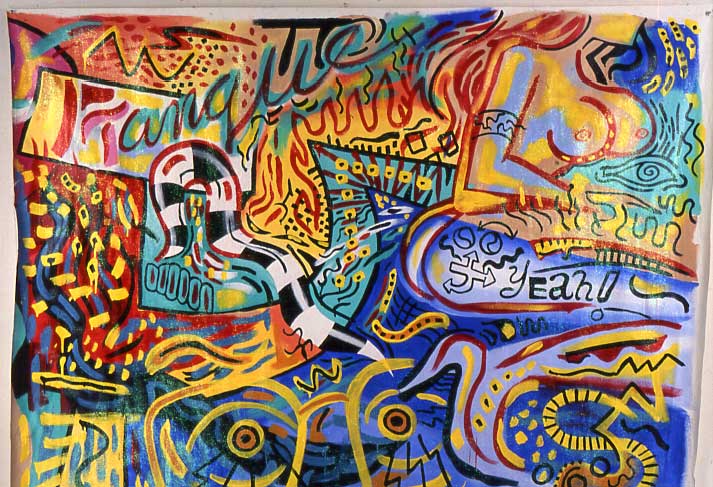
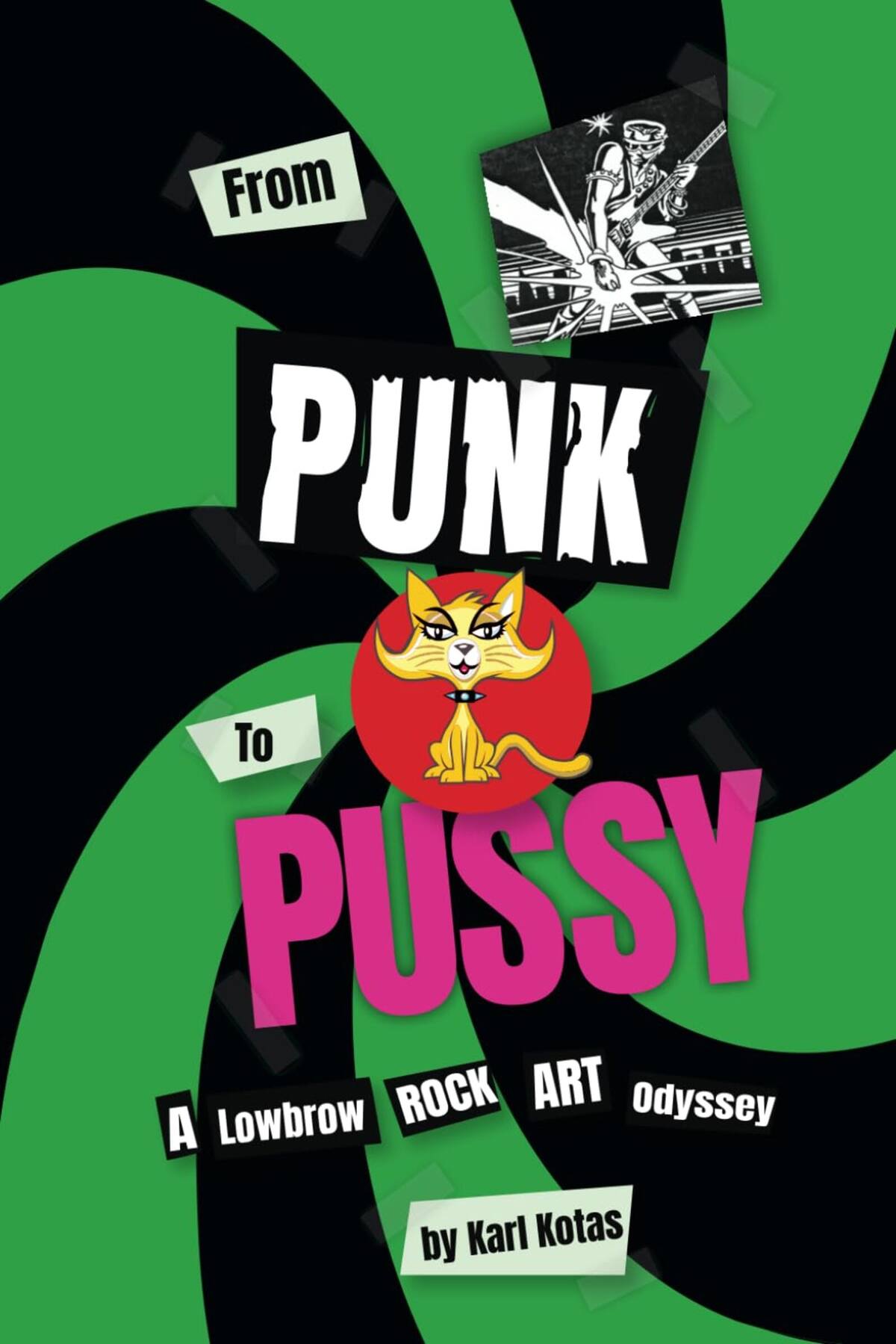
The journey moves through San Francisco's punk world, Buffalo's dying industrial scene, Hollywood, back to Buffalo again, and finally New York City. In each place, he hits hardship, and each hardship pushes him closer to his breakthrough.
San Francisco gives him his first real break: an art director job at a punk magazine called New Wave. It folds within a few months. At one point, he's paid not in money but in beer and secondhand furniture. He recalls moving back to Buffalo as one of the worst decisions he ever made, but even that dead end turns into work: gig posters, local band branding, and a connection to Rick James.
Later, working for the 2006 World Cup, he's assigned to design the mascot, a lion named Goleo. His version comes in second place to one designed by the Jim Henson Company, but his is still officially licensed by FIFA. It stays unapologetically his: underground-comix style smuggled into a mainstream sports mascot.
That style carries through the majority of his work, including the cover of Mary Monday's 45 rpm single I Gave My Punk Jacket to Ricky, for which her manager gave him $50. Kotas took what he could get, even if he was underpaid or not paid at all. He wanted his art to be seen.
In Buffalo, he encounters art that is rougher and more chaotic than San Francisco's, and it inspires his own. His work includes pieces for The Fems, a band whose name comes from a funny idea to go against the status quo of it being an insult to be called a “fem.” He designed a cover that featured cartoon people drinking and smoking in a party from hell, smoke coming out of their noses and the room locked with no exit. From then on, he became their official artist, creating performance posters, often with skeletons and grungy rock-and-roll cartoons.
The book follows him to Manhattan, where the hustle finally starts to pay off in more than beer and furniture. He falls in with the “Lords of Lowbrow” crowd at Ozone Gallery in SoHo, showing alongside artists like KAWS and Joe Coleman. Later, he lands a working space inside Electronic Hollywood during the dot-com boom, drawing in a Flatiron loft full of “darlings of the digerati.”
Along the way, he swings through pure abstract acrylic painting and a handful of pop-art portraits, among them Don Draper and a “Maidenform Woman.” They prove that the underground-comix line was never the only mode he could work in, just the one he kept coming back to. He also shows at Fountain Art Fair, a scrappy Brooklyn and Bushwick alternative to the Chelsea gallery circuit, named as a wink at Duchamp's urinal and more interested in beer and DJs than posh collectors.

From there, the throughline tightens into the tiki illustration he becomes best known for. He traces its origin to a package design job for a men's product called Man of Wood. The client abandoned the project, but the tiki character he'd drawn stuck with him and turned into a decades-long fixation. It eventually led to a collaboration with the industrial band Lords of Acid on a series of NFT drops, the newest distribution technology in a career that has chased a new one every decade.
Midway through the book, he breaks format for a rapid-fire Q&A interview, the kind that asks about his favorite animal and dream job as readily as his art. His voice comes through the clearest here: blunt, self-mocking, and entirely unbothered by whether the reader takes him seriously.


Karl Kotas - From Punk to Pussy
Installed at Current Arts
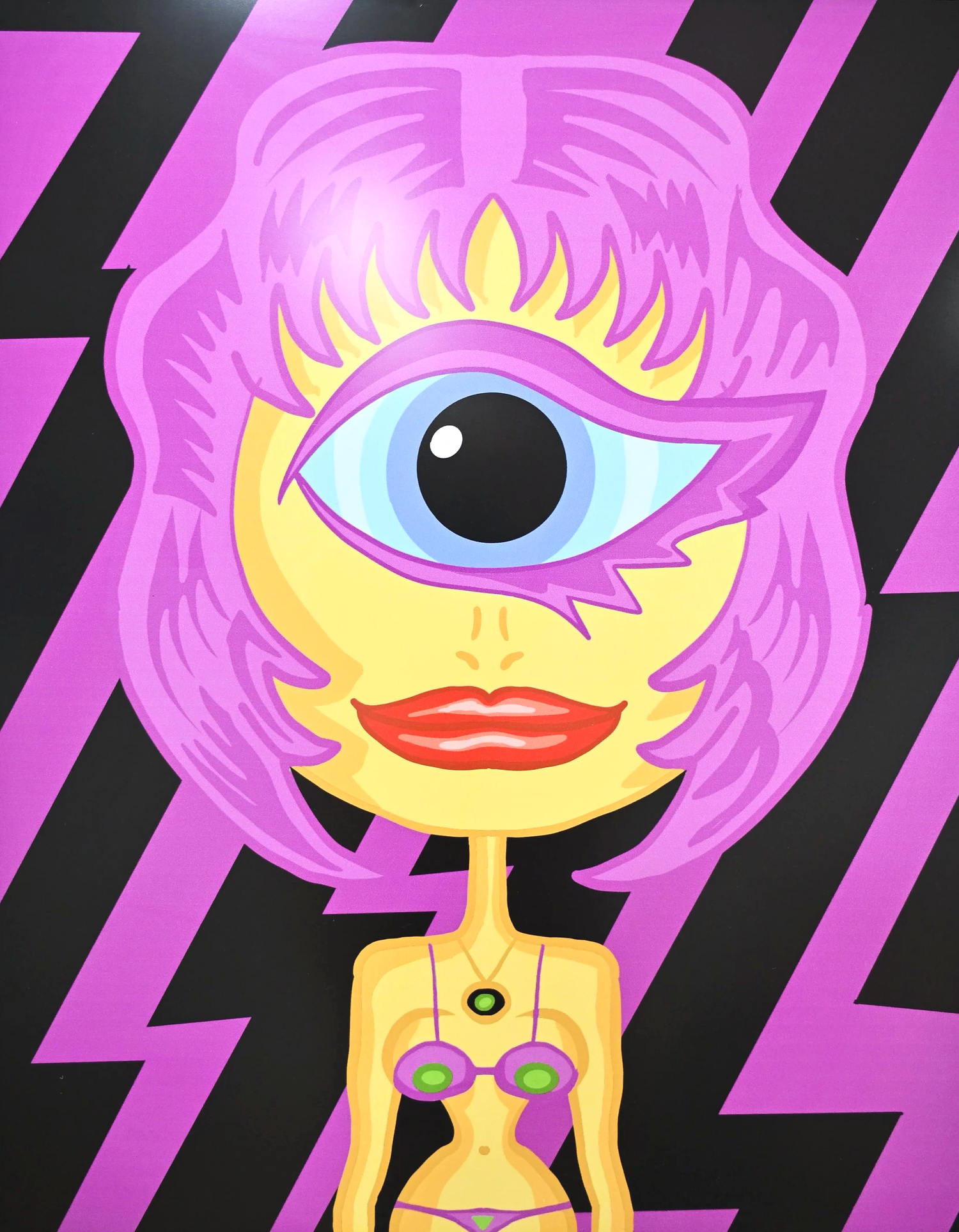
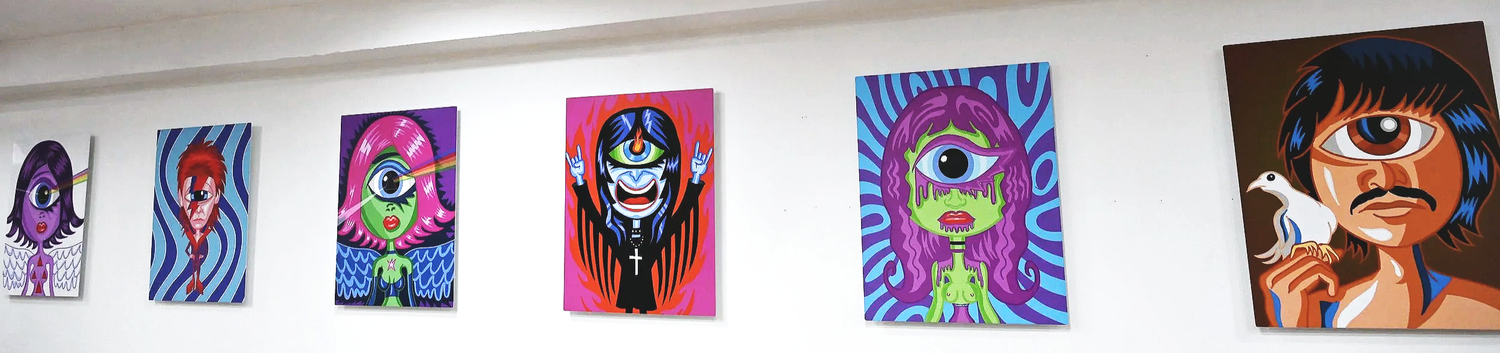
Get the book - $55 · See more available work by Karl Kotas
Words by Denva Beaubrun, Editor and Publisher - (c) 2026 Current Arts
The Current Selection is published by Current Arts, a nonprofit gallery on the Lower East Side, New York.